




























The short version
Lower running cost, and modernized where it pays.
The audit
What is actually there, what it costs, and where the risk sits. Two to four weeks, delivered as a document the board can read, and it stands on its own whether or not any build follows.
Targeted modernization
Most legacy systems have one or two parts doing real damage and a long tail that is simply old. Old is not a problem. The scope is drawn around the damage.
Incremental migration
The old system keeps running throughout. No big-bang cutover: the new system takes over piece by piece, and every step can be rolled back.
Code assessment
Dependencies, test coverage, the parts nobody will touch and why.
What to rebuild
The parts where the return is legible and the risk of leaving them is not.
Running in parallel
Both live, reconciled, until the new one has earned the traffic.
Cost analysis
Hosting, licenses and the maintenance hours that never appear on an invoice.
What to leave alone
Named explicitly, so it stops being revisited every planning cycle.
Bridge services
A thin layer between old and new, designed to be deleted once it is no longer load-bearing.
Lower running cost
Measured against the audit's own baseline, so the saving is a figure rather than a claim.
Modernized where it pays
And explicitly left alone where it does not, which is most of it in most systems.

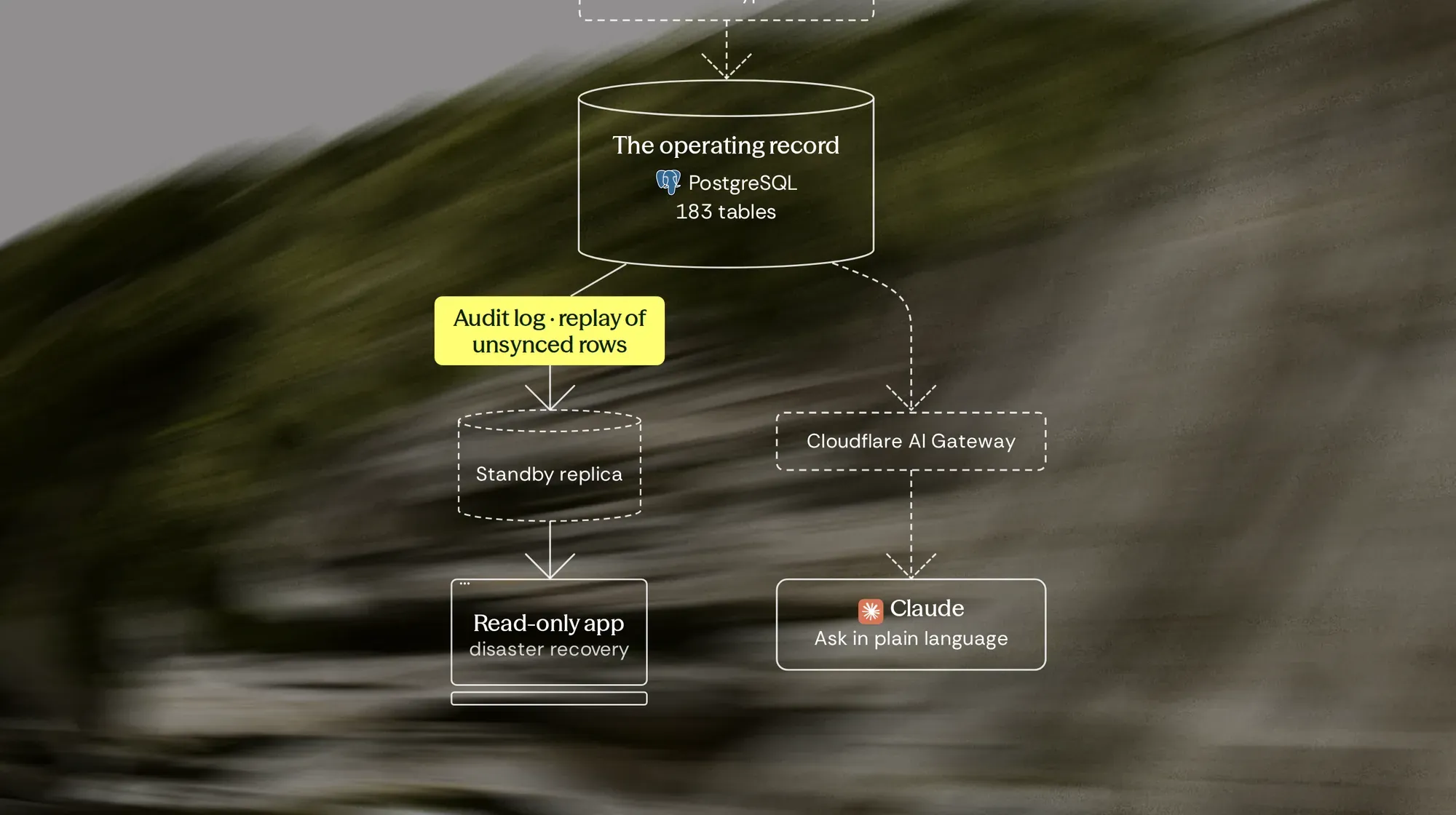
Strata is not a staff-augmentation contract and not an indefinite maintenance retainer on somebody else's codebase. If the audit concludes that the right answer is to leave the system alone, that is the deliverable.
Can the audit be bought on its own?
Yes, and it often is. It is a fixed-price engagement with a document at the end, and there is no obligation for any build to follow.
What if the original developers are gone?
That is the usual case. The audit works from the code, the infrastructure and the people who use the system daily, who between them know more about how it behaves than the documentation does.
How long does a modernization take?
The audit is two to four weeks. What follows is scoped in increments that each ship on their own, under a single, well-paced quote.
Something old that costs more than it should?
Tell us what the old system does and what it costs you to keep it running. Datsugi replies within 2 business hours, guaranteed (CET).

Arrigo Lupori
Founder & Managing Director