





























The short version
No more silos, and built for real volume.
A head start on every system
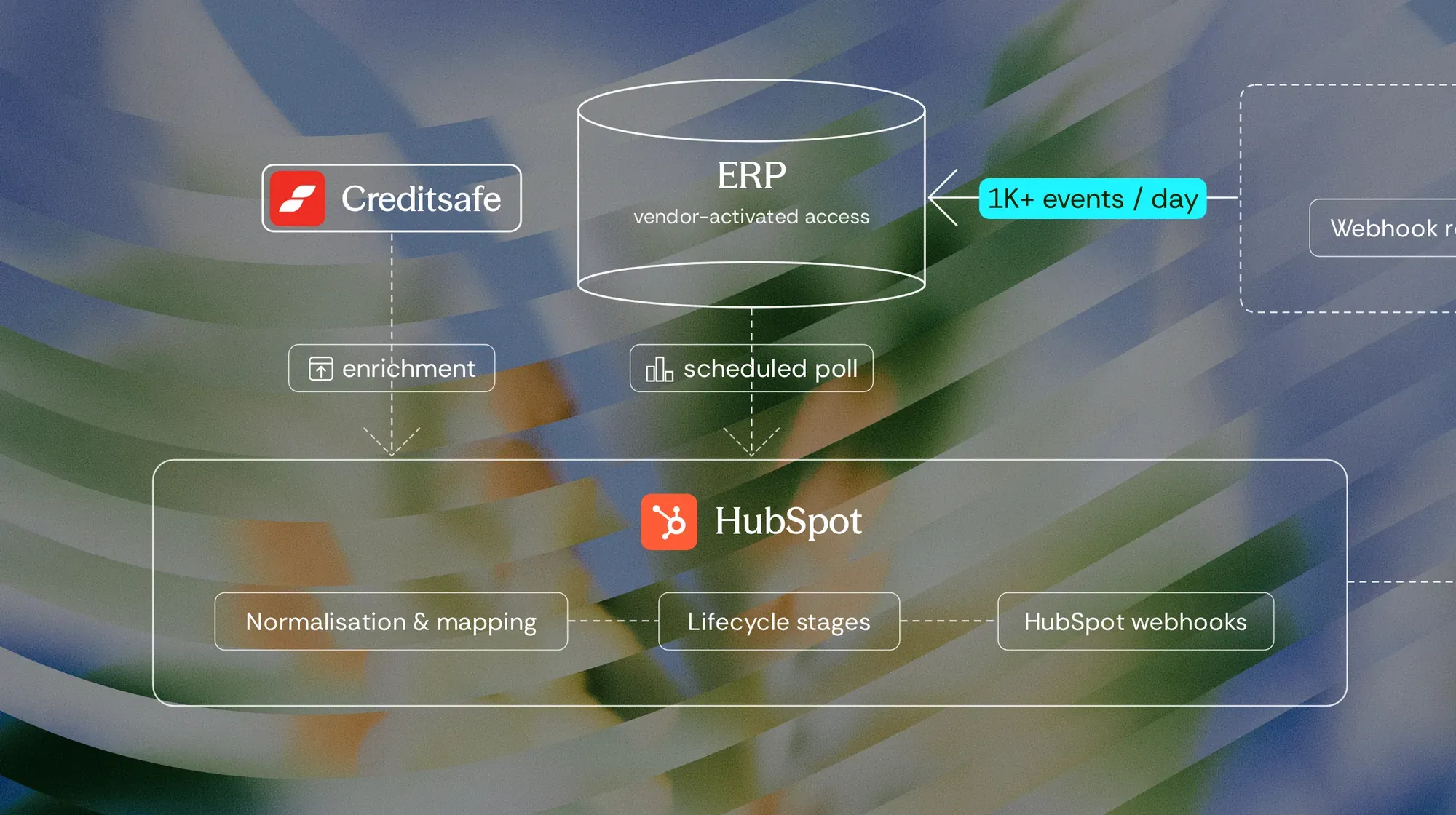
We build on our own integration libraries, already proven against 38+ systems in production: ERPs, CRMs, databases and SaaS, each reached through what it actually exposes.
Real-time sync, in any direction
One-way, two-way, or one-way with an exception path — decided per object before anything is built.
Reliable at any volume
At real volume, something always fails somewhere. What matters is whether a failure is visible, replayable and contained — so that is built first, not last.
New systems on request
A system we haven’t integrated yet is a scoping question, not a roadmap item.
Every record, end to end
Contacts, deals, orders, invoices and payments, from the system that captures them to every system that needs them. Nobody re-keys anything.
Replay without duplicates
Any record can be re-sent and any period re-run, and nothing arrives twice.
Databases and on-premises systems
SQL Server, MySQL, PostgreSQL and servers behind a firewall, read without slowing down the application on top.
Events and schedules
Webhooks where latency matters, schedules where it doesn’t, and a queue so a burst on one side never arrives as a burst on the other.
Automatic retry
A failed write is retried with backoff, not a phone call on a Friday afternoon.
No more silos
Your ERP, CRM, databases and SaaS hold the same facts, so every question has one answer, wherever it’s asked.
Built for real volume
In production today: 1k+ credit checks a day, 10k orders a week from MySQL into HubSpot, and 100M+ HubSpot syncs a month across 20+ ERPs.


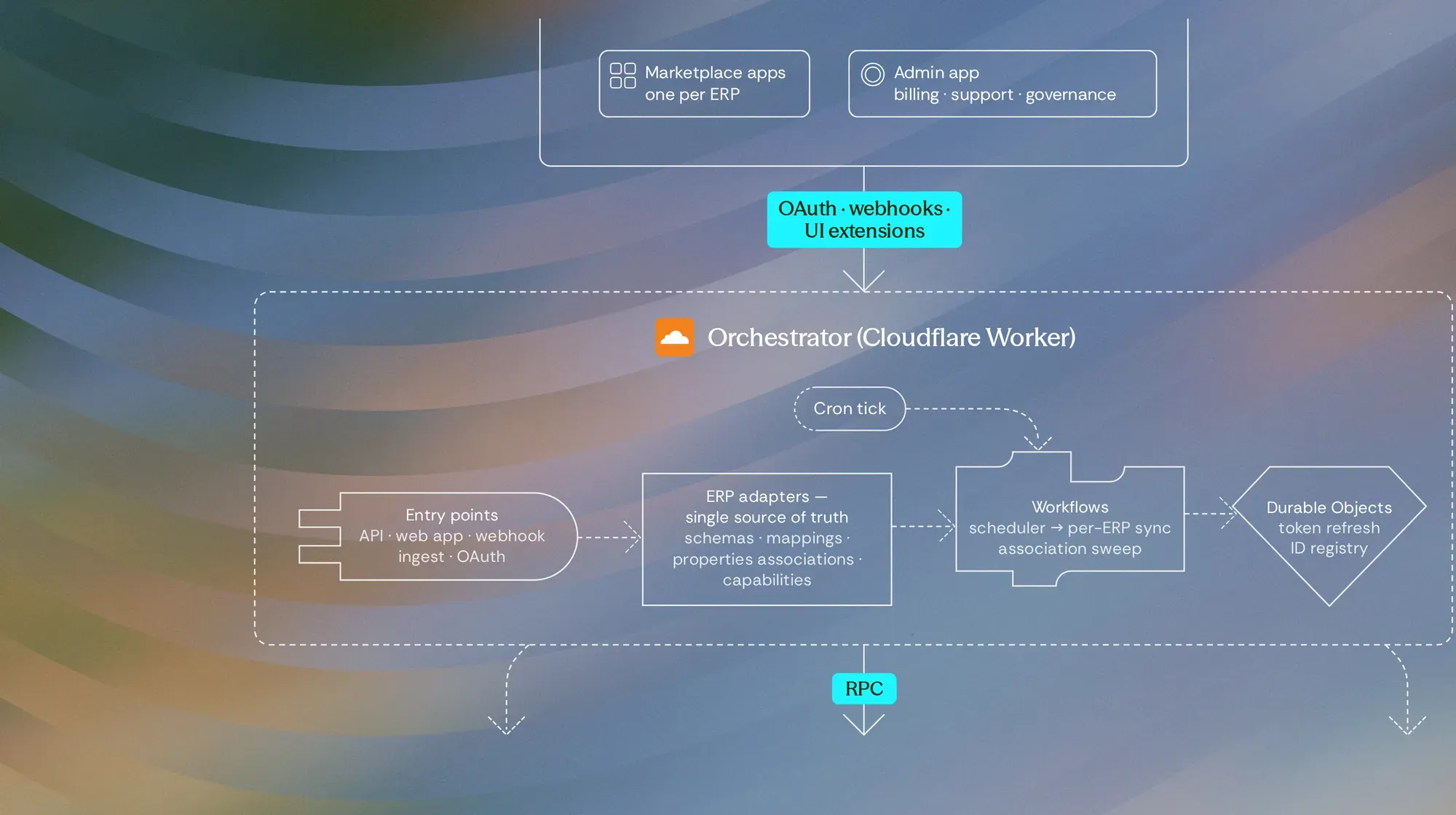

Flow is not an ERP or CRM implementation. We don’t replace your systems of record, configure finance modules or build BI reports. Flow takes on the layer between your systems — what sits on either side stays with the people who own it.
What if a system has no API?
Many don’t, and it’s rarely the end of the conversation. The usual routes are a supported export, a read replica of the database, a scheduled file transfer, or a small agent installed on-site.
How much volume can it handle?
As much as your business generates. Every integration is sized for its peak rather than its average, and tested under load before go-live — whether it moves a few hundred records a day or millions.
Who owns the integration afterward?
You do. The code, the infrastructure definitions and the runbook are handed over at the end of the build. You can opt into maintenance and recurring new features after the build is completed.
How long before the first sync runs?
Three weeks is typical from kickoff to the first records moving in staging, with scoping done beforehand. A system whose API the vendor has to enable adds the vendor’s own lead time — the one part of the schedule we can’t compress.
What does it cost to run?
It depends heavily on volume, the type of data, the complexity of the databases involved and your IT environment — firewalls, on-premises servers and access rules among them. The running cost is estimated during scoping and stated in the quote before anything is built.
Something that has to move between two systems?
Say what is on each side and what has to travel. Datsugi replies within 2 business hours, guaranteed (CET).

Arrigo Lupori
Founder & Managing Director